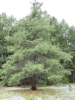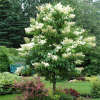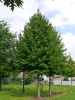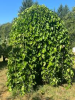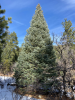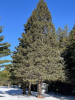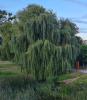


A tree is the longest-lived decision on a property and usually the most valuable. It is also the one where a mistake is hardest to walk back — a shrub in the wrong place is a Saturday, a forty-foot tree in the wrong place is a crane.
Which is why the measurements come before the species. Mature width against the house, the drive and the property line. What is overhead, because a tree under a power line gets topped eventually and topping ruins it permanently. Where the sewer lateral and the leach field run, because several of the fastest-growing trees available here are the ones whose roots find them. Those four checks take twenty minutes and they matter more than the choice between any two good trees.
The split below is how people actually shop. Evergreens hold their foliage and carry the structure of a property through five months when nothing else does. Deciduous trees drop their leaves, which is the easier life on this ground — a dormant plant does not lose water through a dry January wind — and they divide again into shade trees, the smaller ornamental trees, and fruit.
Alkaline soil is the filter that decides most of this. Several of the best-known street trees in the country go chlorotic here and spend fifteen years looking sick. They are not in this catalog.