Shade Trees

A shade tree is the highest-value plant decision anybody makes on a property, and it is the one with the longest tail. Everything else in a yard can be changed in a weekend or a season. A tree planted this spring is making its case in 2060, and where it goes is a choice somebody lives with for decades — usually somebody who was not there when it was planted.

It is also the only thing in this catalog that measurably changes how a house works. A mature canopy on the west and southwest side takes the afternoon sun off the wall and the windows in July, and that shows up on a power bill rather than only in a photograph. East shade is pleasant. West shade is functional, and it is worth deciding where a tree goes on that basis before deciding which tree it is.

Here is what we plant.

What we stock

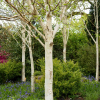
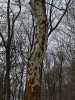
Birch Birches are ornamental trees valued for their distinctive bark, light canopy, and graceful branching. Their bark ranges from white to creamy tan or peeling brown depending on species and cultivar,…
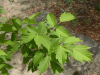
Boxelder Boxelder is a fast-growing native maple valued for its adaptability and tolerance of difficult conditions. It develops an irregular, spreading canopy with compound leaves that create a light, airy…
Buckeye / Horsechestnut Buckeyes and horsechestnuts are medium to large shade trees known for their bold foliage and showy spring flower spikes. They form broad, rounded canopies that provide substantial shade and strong…
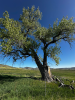
Cottonwood Cottonwoods are fast-growing, large shade trees commonly found along waterways and open landscapes in the Rocky Mountain region. They develop tall, broad canopies with bright green leaves that…
Elm Elms are adaptable shade trees valued for their vase-shaped canopy and ability to provide filtered shade over lawns and streets. Modern cultivars have been selected for disease resistance and…
Hackberry Hackberry is a durable shade tree valued for its adaptability and tolerance of urban and challenging conditions. It develops a broad, rounded canopy with medium green leaves and distinctive gray bark…
Hornbeam Hornbeams are refined, medium-sized trees valued for their dense canopy, strong branching structure, and formal appearance. They develop a rounded to oval crown with smooth gray bark and neatly…
Japanese Pagoda Tree Japanese pagoda tree is a medium to large shade tree valued for its rounded canopy and late-summer flower display. It develops a broad, spreading crown with compound leaves that provide filtered…
Kentucky Coffeetree Kentucky coffeetree is a bold, open-canopied shade tree valued for its coarse texture, unique branching structure, and strong adaptability to urban and Rocky Mountain conditions. It develops a broad,…
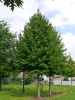
Linden Lindens are stately shade trees prized for their symmetrical canopy, dense foliage, and refined appearance in formal and residential landscapes. They develop a strong central trunk with a pyramidal…
Maple Maples are widely used shade and ornamental trees valued for their balanced canopy, seasonal color, and adaptability to a range of landscape settings. In Rocky Mountain landscapes, selections are…
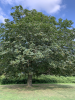
Oak Oaks are long-lived shade trees prized for their strength, structure, and seasonal character. In Rocky Mountain landscapes, species and hybrids are selected for drought tolerance, cold hardiness, and…
Planetree / Sycamore Planetrees, often referred to as sycamores in landscape use, are large shade trees known for their broad canopy and distinctive exfoliating bark that reveals patches of cream, tan, and gray. They…
Turkish Filbert Turkish filbert is a medium-sized tree valued for its upright form, dense canopy, and adaptability to urban conditions. It develops a strong central trunk with a pyramidal shape when young, maturing…
Western Catalpa Western catalpa is a medium to large deciduous tree valued for its large heart-shaped leaves and showy summer flowers. It develops a broad, rounded canopy that provides dense shade and a bold…
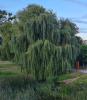
Willow Willows are fast-growing trees known for their graceful form, flexible branches, and ability to thrive in moist soils. Depending on species and cultivar, they may develop upright, spreading, or…

Mature size is the entire game

Nearly every serious problem with a shade tree traces back to the same thing: it was planted where it fit at the time. Fifteen or twenty years later the consequences arrive all at once, and they are expensive.

Before a shade tree goes in the ground, four things get measured:

  • Overhead. A power line means a shade tree is the wrong plant. The utility will eventually top it, and a topped shade tree is permanently ruined — structurally weakened and ugly for the rest of its life. Under wires, plant an ornamental.
  • Underground. Sewer laterals, septic tanks and leach fields. Cottonwood, willow and silver maple are the classic offenders here — their roots find a joint in a line and grow into it, and the repair bill dwarfs what the tree cost.
  • Distance from the house. Roughly half the mature canopy width from the foundation, minimum. Closer than that and you are pruning it off the roof every few years.
  • Drives and walks. Surface roots lift concrete. It is slow and it is not repairable without taking the tree or the slab.

Fast growth is a trade, and here so is the species list

Cottonwood, willow, boxelder and silver maple grow quickly, which is exactly why people plant them. They also make weak, low-density wood, they tend to be shorter-lived, and they are the trees we get called about after a wind event with a limb through something. That does not make them the wrong choice — a windbreak on acreage, a riparian corner, a fast screen while something slower fills in — but they get chosen knowingly, and with a bit of room around them.

And the soil narrows the list further. Alkaline ground here locks up iron, and several of the most-requested shade trees show it badly — silver and red maple, birch, pin oak. Those go yellow between green veins, decline over years, and no amount of feeding fixes it. There are better choices that want to be here, and they are on the list above.

The detail that kills more young trees than anything else

Planting depth. A tree set too deep, with the root flare buried under soil or mulch, declines slowly for five or ten years and nobody connects the two. The flare — where the trunk widens into the roots — belongs at or slightly above finished grade, visible. If you cannot see where the trunk widens, it is too deep. It is the most common installation error in the trade and it is entirely avoidable.

Request an Estimate or call 970-835-9661