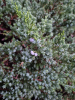
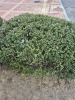
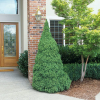
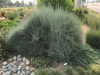
An evergreen shrub is doing its job in February. That is the whole case for it. Five months of the year a deciduous planting is bare sticks, and whatever holds its foliage is carrying the structure of the yard — the mass at the corner of the house, the line along the walk, the thing that keeps a bed from reading as an empty rectangle under snow.
What gets left out of that pitch is that February is also when an evergreen is under the most stress it will face all year, and the reason is not the cold.
An evergreen keeps its leaves, so it keeps losing water through them all winter. When the ground is frozen the roots cannot replace it. Add a dry west wind and the kind of intense high-altitude winter sun we get here, and the plant dries out from the top down — foliage goes brown and crispy, worst on the side facing the weather. That is winter burn, and it is the single most common way an evergreen shrub fails in this valley. It has nothing to do with hardiness ratings.
Which shapes the whole list below.
Needled beats broadleaf here, and it is not close
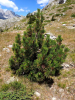
Junipers, mugo pine, dwarf spruce and the other needled and scaled evergreens hold up in this climate because they are built for it — small surface area, waxy coating, and in most cases an origin somewhere just as dry and windy.
Broadleaf evergreens have more leaf surface losing more water, and they show it. Boxwood is the one people ask for most and it is genuinely marginal here: it will burn on the south and west sides and look bronzed and rough by March. That does not mean do not plant it. It means plant it on an east exposure, out of the wind, where it has a chance — and buy a hardy cultivar rather than whatever is cheapest.
Two things that decide whether an evergreen shrub makes it
Where it goes. North and east exposures, sheltered from the prevailing west wind, away from reflected heat off a light wall or rock mulch. A broadleaf evergreen on an exposed southwest corner is a plant we will be replacing.
A deep soak in late fall, before the ground freezes. This is the most useful thing anybody can do for an evergreen here and almost nobody does it. The plant is going to spend four months losing water it cannot replace — sending it into winter fully watered is the difference between green in March and brown in March. If the winter runs dry with no snow cover, water again on a warm day when the ground has thawed.
One more thing, and it is about deer
In February, an evergreen is one of very few green things available. Browse pressure that a planting shrugs off in July is a different matter when nothing else is growing, and arborvitae and yew in particular are near the top of what deer will look for. If you have deer, protect evergreen shrubs through their first winters at minimum, and expect to keep protecting the palatable ones.
Request an Estimate or call 970-835-9661