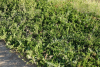


A groundcover does what turf does without the mowing, the water or the edging. It closes bare soil, keeps weeds from getting a start, and holds ground that would otherwise wash.
Its real value here is the awkward ground, and most properties have some. Slopes too steep to get a mower onto safely. Dry shade under a mature tree where grass has never grown and never will. The strip between a walk and a drive that is too narrow to water without soaking the concrete. Those are places where a lawn is a permanent argument, and a groundcover settles it.
It is not a lawn substitute where people walk. Almost nothing low and spreading takes foot traffic the way turf does, and a groundcover used as a shortcut wears through in one season. If there is a route across it, stepping stones go in at install rather than getting added after the damage.
Two things to know before choosing one. Spreading is the point, so it needs containing where it meets a lawn or a neighbor — that is an edging decision made at install. And weed suppression only starts once the canopy closes. For the first two seasons a groundcover bed needs weeding like any other bed, and the ones that fail are almost always the ones abandoned in year one.